When to Replace Drywall: 7 Signs It May Need Replacement
New Paragraph
Knowing when to replace drywall and when a simple repair will do can save you from unnecessary work while preventing damaged material from being covered up with another temporary patch.
Small holes, dents, nail pops, and isolated cracks can often be repaired. Replacement becomes more likely when the drywall itself has been weakened by moisture, is sagging or crumbling, has widespread damage, or continues developing problems after previous repairs.
The important distinction is whether the damage is limited to the surface or whether the drywall panel itself is no longer in good condition.
If you're unsure which situation you're dealing with, professional drywall repair can range from patching minor damage to removing and replacing larger damaged sections.
When Does Drywall Need to Be Replaced?
Drywall generally needs to be replaced when the board itself is damaged beyond a practical repair.
That can include drywall that has become soft or swollen from moisture, severely damaged sections, sagging panels, crumbling material, or areas that need to be opened because of damage behind the wall.
Drywall does not need to be replaced simply because it is old. Properly installed drywall can remain in place for many years when it stays dry, secure, and in good condition.
As a general rule:
Repair may be enough when the drywall is dry, firm, securely attached, and the damage is limited to a small area.
Replacement may be needed when the drywall is soft, warped, sagging, extensively damaged, contaminated, or no longer provides a sound surface for finishing.
How do I know if my drywall needs replacing?
1. Water Damage Has Softened or Warped the Drywall
Water damage is one of the clearest reasons drywall may need to be replaced.
Leaks from plumbing, roofing, windows, appliances, or flooding can allow drywall to absorb moisture. Depending on the severity and duration of the exposure, you may notice:
- Brown or yellow water stains
- Swelling around seams
- Bubbling paint
- Warped drywall
- Soft or spongy areas
- Crumbling gypsum
- Sagging wall or ceiling sections
A water stain alone does not automatically mean the drywall needs replacement. If the source was resolved quickly and the drywall remains completely dry, firm, and intact, repair may still be possible.
However, drywall that has noticeably softened, swollen, deteriorated, or lost its shape often needs to be removed and replaced.
The source of the moisture should always be identified and addressed before new drywall is installed.
2. The Drywall Feels Soft, Spongy, or Crumbly
One of the simplest ways to recognize badly deteriorated drywall is by how the material feels.
Drywall should provide a firm surface. If an affected section feels unusually soft, spongy, swollen, or begins crumbling with light pressure, the gypsum core may have deteriorated.
This commonly occurs after significant or prolonged moisture exposure.
Simply adding joint compound over weakened material will not restore the drywall underneath. The damaged section may need to be removed so new drywall can be installed and properly finished.
For larger residential projects involving replacement, remodeling, or multiple rooms, our residential drywall services cover installation, repair, finishing, texture, ceilings, basements, and larger whole-home drywall scopes.
3. Drywall Is Sagging or Pulling Away
Sagging drywall should be investigated rather than simply covered or refinished.
On ceilings, sagging can sometimes occur when drywall has been exposed to moisture or is no longer properly secured. On walls, bulging or uneven panels may indicate fastening, installation, moisture, or other underlying issues.
The cause matters.
If the panel itself is still in good condition and the issue can be corrected appropriately, complete replacement may not always be necessary. If the drywall has become distorted, weakened, or extensively damaged, removing and installing new material may provide the more reliable solution.
Large or rapidly developing changes in a wall or ceiling may also warrant evaluation of the underlying cause rather than assuming the drywall itself is the source of the problem.
4. Cracks Keep Returning After Repair
Small drywall cracks can happen for several reasons and do not automatically mean the drywall needs replacement.
A minor isolated crack along a seam may simply require proper repair and refinishing.
The situation becomes more important when cracks:
- Keep returning in the same location
- Continue growing
- Appear across several areas
- Are accompanied by movement around doors, windows, ceilings, or other building components
- Occur alongside sagging or other unusual changes
Repeatedly patching a crack without determining why it keeps returning may only hide the symptom temporarily.
In some cases, the solution may still be drywall repair. In others, damaged sections may need replacement after the underlying cause has been addressed.
5. Large Sections Have Been Heavily Damaged
A small nail hole or doorknob dent rarely requires replacing an entire sheet of drywall.
Large impact damage is different.
If a wall has extensive holes, broken edges, crushed board, multiple previous patches, or damage across a broad area, replacing a section can provide a cleaner and more stable surface than attempting to patch each individual problem.
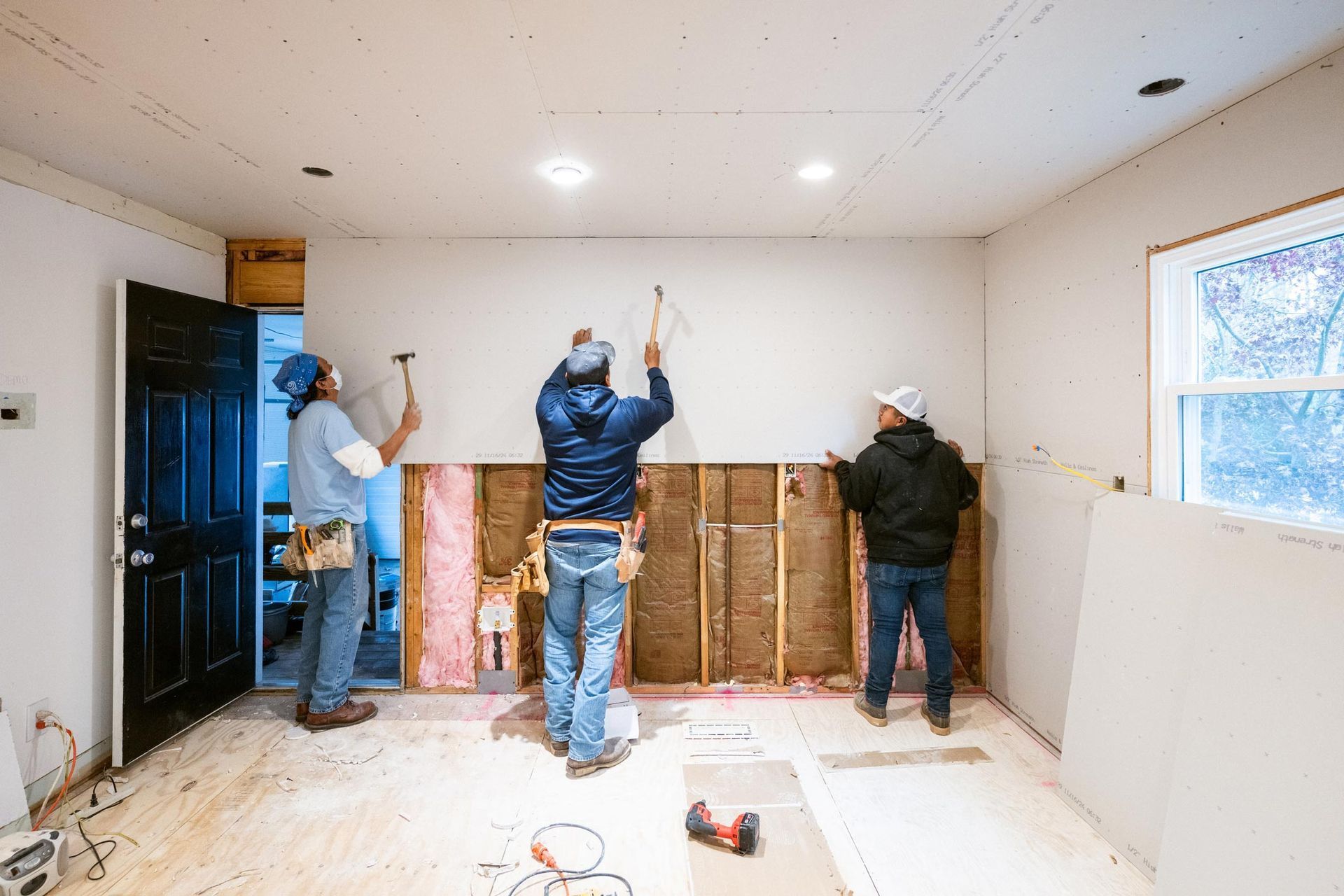
The goal is not necessarily to replace an entire wall. Professional drywall replacement can involve cutting out only the affected section, installing new board, taping and finishing the joints, and blending the repaired area into the surrounding surface.
When new material is required, professional drywall installation in Denver can take the project from new board installation through the finishing stages.
6. You See Signs of a Bad Drywall Job
Not every drywall problem develops because the material is old or damaged. Sometimes the issue begins with the original installation or finishing.
Common signs of a bad drywall job can include visible seams, uneven joints, poorly finished corners, loose or bubbling tape, repeated nail or screw pops, inconsistent surfaces, or panels that appear improperly secured.
However, signs of bad drywall installation do not automatically mean the drywall needs to be replaced.
Many cosmetic finishing problems can be corrected through re-taping, joint compound, sanding, skim coating, or refinishing.
For example, visible seams or uneven joint work may be an issue with the finish rather than the drywall panels themselves. In these cases, professional drywall finishing may correct the surface without removing otherwise sound drywall.
Replacement becomes more likely when the panels themselves were improperly installed, damaged, warped, poorly secured, or cannot provide a suitable foundation for the corrected finish.
What Does a Good Drywall Job Look Like?
Properly finished drywall should create a consistent surface where joints, fasteners, and transitions are difficult to see after finishing and painting.
Corners should appear clean and consistent, joints should blend into surrounding surfaces, and the appropriate finish should be selected for the room and lighting conditions.
Texture also matters when damaged drywall is being replaced.
New drywall installed next to an existing textured wall should be finished so the repaired section blends naturally with the surrounding area. A-Pro-Finish provides drywall texture and texture matching for repairs, additions, remodels, and new drywall.
7. Mold or Contamination Has Affected the Drywall
Drywall contains a paper facing, which can be affected when moisture problems are allowed to persist.
If visible mold or suspected contamination is present, the first priority should be identifying and resolving the underlying moisture or contamination issue.
Whether drywall needs to be removed will depend on the extent and type of damage. Because contamination can extend beyond what is visible on the painted surface, heavily affected drywall should not simply be covered with paint or joint compound.
Any necessary remediation should be completed before replacement drywall is installed and the wall is closed again.
Repair or Replace Drywall? A Simple Comparison
One of the most common questions homeowners ask is whether damaged drywall can still be repaired.
The answer depends mainly on the condition of the drywall, the extent of the damage, and what caused it.
| Damage | Repair May Be Enough | Replacement May Be Better |
|---|---|---|
| Small nail or screw holes | ✓ | |
| Minor dents | ✓ | |
| Small isolated hole | ✓ | |
| Minor surface crack | ✓ | |
| Nail or screw pops | ✓ | |
| Visible seam or finishing issue | ✓ | |
| Texture mismatch | ✓ | |
| Soft or deteriorated drywall | ✓ | |
| Severe water damage | ✓ | |
| Sagging or badly warped panel | ✓ | |
| Extensive impact damage | ✓ | |
| Widespread damaged material | ✓ | |
| Contaminated drywall | ✓ |
The key question is whether the board remains dry, firm, stable, and securely attached. If it does, repair may be possible.
If the material itself has failed, installing new drywall is usually the more appropriate approach.
When to Install New Drywall Instead of Continuing to Repair It
There is another situation where homeowners ask when to install new drywall even though there may not be one major area of damage.
Older walls sometimes accumulate years of patches, poorly blended repairs, uneven texture, cutouts from electrical or plumbing work, and previous remodeling.
Individually, each problem may be repairable. Collectively, extensive repair work can sometimes become less practical than replacing larger sections and creating a consistent new surface.
New drywall may also make sense during:
- Major room remodels
- Home additions
- Layout changes
- Extensive plumbing or electrical renovations
- Whole-room wall or ceiling replacement
- Unfinished basement projects
If you're finishing or remodeling a lower level, our basement drywall installation includes wall and ceiling installation, hanging, taping, finishing, textures, and Level 5 finishing where appropriate.
Does Old Drywall Need to Be Replaced?
Not necessarily.
There is no universal age at which drywall suddenly needs replacement.
If drywall remains dry, secure, relatively flat, and in good condition, age alone is not a reason to tear it out.
Condition matters much more than the date it was installed.
Older drywall may need more extensive work when it has accumulated significant water damage, repeated repairs, deteriorated sections, or modifications from previous remodeling projects.
How Do I Know If My Drywall Needs Replacing?
Start by looking beyond the painted surface.
Ask:
- Is the drywall still firm?
Soft or crumbling drywall deserves further investigation. - Is it dry?
Moisture problems should be resolved before repairing or replacing drywall. - Is the panel still flat and secure?
Severe sagging, warping, or movement may point to a larger problem. - Is the damage isolated?
Small localized damage is generally more suitable for repair than widespread deterioration. - Has the same problem been repaired repeatedly?
Recurring cracks, water staining, or failed patches can indicate that the underlying cause has not yet been resolved.
These questions usually provide a much better indication of whether drywall requires repair or replacement than appearance alone.
Frequently Asked Questions About Drywall Replacement
- When should drywall be replaced instead of repaired?
Drywall should generally be replaced when the material itself has become significantly weakened, soft, warped, sagging, contaminated, or extensively damaged. Small holes, dents, cracks, and surface imperfections can often be repaired when the surrounding drywall remains sound.
- When does drywall need to be replaced after water damage?
Replacement may be necessary when water exposure causes drywall to soften, swell, crumble, sag, or otherwise deteriorate. The leak or moisture source should be corrected and the area properly dried before new drywall is installed.
- How do I know if drywall needs replacing?
Look for soft or spongy material, major water damage, sagging, extensive holes, crumbling drywall, widespread deterioration, or damage that repeatedly returns after repair.
- Are cracks a sign that drywall needs replacement?
Not necessarily. Many small drywall cracks can be repaired. Recurring, widening, or widespread cracks should be investigated to determine why they are forming before repeatedly patching the surface.
- What are signs of bad drywall installation?
Possible signs include visible seams, loose tape, uneven joints, poorly finished corners, repeated fastener pops, inconsistent surfaces, or improperly secured panels. Many finishing problems can be corrected without replacing all of the drywall.
- Can you replace only part of a drywall wall?
Yes. Drywall replacement does not always mean removing the entire wall. A damaged section can often be cut out and replaced, then taped, finished, and blended with the surrounding surface.
Need Help Deciding Whether to Repair or Replace Your Drywall?
Sometimes the difference between a straightforward drywall repair and replacement is obvious. Other times, the damage visible on the surface tells only part of the story.
A-Pro-Finish Drywall works with homeowners throughout the Denver Metro area on drywall repairs, replacement, installation, finishing, texture matching, remodels, basements, and larger residential drywall projects.
Based in Westminster, our team provides professional drywall installation in Westminster and serves homeowners throughout Denver and surrounding communities.
If you're unsure whether your damaged drywall should be repaired or replaced, contact A-Pro-Finish Drywall to discuss the condition of your walls or ceilings and the scope of the project.